Friday, February 27, 2009

My Personal Accident Claims

Not sure how many of you remembered that I had sprained my back on 7th December when I helped my Father-in-law to carry a chair up the stairs then. I went A&E for treatment and was paralzed for several days.
http://akhiat.blogspot.com/2008/12/down-with-back-sprain.html

I submitted the claims to the insurance company 1 week after the sprain and as of today, this claim of $75 is still not settled. Let me share what happened.

* Mid December - I submitted all claim forms with my original CGH receipt
* Early January - There was nothing heard from the company and I decided to call. I was surprised to learn that they they did not receive the claim forms and receipts. I specifically told them where I submitted it and they told me that they will check.
* Mid January - There was again nothing heard from them if they found my forms and I called again. They told me that they are still searching. I decided to submit a fresh claim with duplicate medical bill which I had retained myself and not wait for them to search.
* 3rd week January - I received a letter from them and they told me that they are processing the claim.
* Early February - I called them to enquire status of claims. They told me that they are processing it.
* 3rd Week Feb - I received a letter from them. I thought that it must be the claim cheque but I received this instead...

* 3 days ago - I called the company with regards to this letter. I argued that they are the one who lost my original receipts and it make no sense for me to go back to the doctor and ask for a note on the cause and nature of the injury and pay another $75 again?
* They told me that I should know that a doctor's note is required for accident claims and I rebutted that I really don't know where on the claim form stated that I must have a note from doctor as I thought my declaration on the cause and nature in the claim form is sufficient. I did many claims before and I enountered problem for my own case. They promised to relook into my claims again.

From this experience, I think I'm able to better advice my clients. Better get a memo from doctor on the cause and nature of accident.

Saturday, February 21, 2009

The Big Mac Index

Big Mac was created in 1968 by a McDonald’s franchisee in Pittsburgh, Pennsylvania.
Millions of viewers was asked the following question in a 1970s TV commercial.

"twoallbeefpattiesspecialsaucelettucecheesepicklesonionsonasesameseedbun?"

This sandwich is currently sold at over 25,000 McDonald’s restaurants in 120 countries around the world. Because of its popularity, the Big Mac allows economists to make comparisons of exchange rates and relative prices in countries around the globe. This comparison is by using an indicator called "Big Mac Index".

The Big Mac Index was introduced in The Economist in September 1986 by Pam Woodall as a semi-humorous illustration and has been published by that paper annually since then. The index also gave rise to the word burgernomics.

The Big Mac Index is based on the theory of purchasing-power parity, the notion that a dollar should buy the same amount in all countries. Thus in the long run, the exchange rate between two countries should move towards the rate that equalises the prices of an identical basket of goods and services in each country. Our "basket" is a McDonald's Big Mac, which is produced in about 120 countries. The Big Mac PPP is the exchange rate that would mean hamburgers cost the same in America as abroad. Comparing actual exchange rates with PPPs indicates whether a currency is under or overvalued.

For example, using figures in July 2008:
* The exchange rate in July 08 between US and UK is 2:1
* The price of a Big Mac was $3.57 in the US and £2.29 in the UK
* This means that the same Big Mac actually cost $4.57 in UK compared to $3.57 in US.
* The implied purchasing power parity was 1.56, that is the local price in Britain divided by the price in the United States and this compares with an actual exchange rate of $2.00 to £1 at the time.
* In conclusion, the pound was overvalued against the dollar by 28%.

This index is no way a precise forecasting tool of currency value. A Big Mac's price reflects more than just the cost of bread and meat and vegetables. They can also be distorted by differences in the cost of non-tradable goods and services, such as rents and labour. Nevertheless this index is still published and followed by some people.

My last check
Singapore Big Mac cost $3.95, US Big Mac cost $3.54
Exchange Rate is US$1 : S$1.51
Our Singapore Big Mac actually cost only US$2.61 in Singapore
Hence, are our currency undervalued by 26.3% compared to the US currency???

It may sounds very unprofessional and silly to use the Big Mac to forecast currency value but over the years, it had indeed provided some indication as to where the world's major currencies may be going.

Monday, February 16, 2009

Gambling Vs Investment

I remembered reading “Secrets of the Millionaire Mind” by T.Harv Eker sometimes back about how rich people believe in creating their lives and poor people believes that life happens to them. Rich people work towards their wealth and poor people blame everyone for the predicament they are in. Rich people put most of their money to invest and grow their passive income and poor people put a large portion of their money into gambling.

Many of us are sub-consciously working towards for our wealth. We need the money for retirement, children education, car, holiday, etc. We know money is important but how many of us are consciously accumulating it and making sure that it grows at a rate we expect it to be?

I had several clients in their 50s and 60s who took 2 extremes when it comes to investment. Before the economic boom in 2004, they put 20% of their money into shares and 80% into fixed deposits or structured products that give below 2%. When their fixed deposit or structured plans matures over the years, they pump the proceeds into shares. Their portfolio turns to probably 80% shares and 20% cash by 2007. Most of the shares they bought are largely those recommended by their friends for so-called insider tips.

During the past 15 months, they had seen their shares portfolio dropped by at least 60% because many of their shares are probably make up by penny stocks. Many of them start blaming their friends or stockbrokers for giving them the wrong investment advice.

They feel the pain now but they will not learn their mistake just like a gambler who will continue to gamble no matter how much money they had lost. Believe me not, they will not put any money now but will wait until the market boom before investing again.
Why do I say that these investors are actually gamblers?
1) A gambler won before and they know how easy money comes when it win. Money that comes through work is simply too slow. They are not looking forward a 6%p.a returns but looking for a 60% returns in 1-2months.
2) Gamblers cannot accept that they had lost and the only way to get recoup their money is through gambling again. They lost 60% now. They will want to recoup it within 1 years, not 10 years.

I'm not preaching that we should not gamble or speculate in shares. What I noticed is the lack of discipline in most people. They save and invest irregularly. They lacks an investment process and a monitoring system. They need someone to help them in updating their portfolio and to encourage them to follow a proper investment process. Be a disciplined investor and not a Gambler...

Thursday, February 12, 2009

Valentine's Day Greetings...

I had sent 56 Valentine's Day cards to my selected female clients today... Following is the message that comes with the card...

**************
Its St. Valentine’s Day soon, I like to take this chance to share with you the meaning of this day, where candy, flowers, and gifts are exchanged between loved ones, all in the name of St. Valentine. But who is this mysterious saint and why do we celebrate on the 14th of February?

Legend has it that a certain third-century priest named Valentine persisted in performing marriage ceremonies despite a ban by the Roman emperor Claudius II (Claudius was persuaded that single men made better soldiers for his army). Thrown into jail, Valentine formed a relationship with his jailor's daughter (some say he cured her blindness) and he signed his last message to her "From your Valentine," a phrase which still gets a lot of mileage.

St. Valentine was executed on February 14, in the year AD270, and his remains (probably his, but there were two other Christian martyrs called Valentine) are now on display in the Whitefriar Street Carmelite Church in Dublin.

In Great Britain, Valentine's Day began to be popularly celebrated around the seventeenth century. By the middle of the eighteenth century, it was common for friends and lovers in all social classes to exchange small tokens of affection or handwritten notes.

By the end of the century, printed cards began to replace written letters due to improvements in printing technology. Ready-made cards were an easy way for people to express their emotions in a time when direct expression of one's feelings was discouraged. Cheaper postage rates also contributed to an increase in the popularity of sending Valentine's Day greetings.

Today, Valentine’s Day is not only a day where couples express their affection, it is also a day for us to celebrate with friends, siblings, parents, grandparents, teachers or anyone who made a difference to our lives with their affection and support.

I like to take this opportunity to express my appreciation for your trust and support over the years. I understand that I need to help you with a financial review but due to time constraint and comprehensiveness of each of my report; I’m only able to help those who see the needs and contacted me. I sincerely hope you can let me know when you are ready for a proper analysis.

Wish all of you a very Happy St. Valentine’s Day…

Wednesday, February 11, 2009

Summarise and comment on our 2009 Budget

Singapore revealed its 2009 Budget in Parliament on 22 January 2009. We flexed our muscle by announcing a $20.5 billion Resilience Package as Singapore faces its worst-ever recession. The Package aims to save jobs in the recession, and to help viable companies stay afloat.

It also introduces new measures that will prepare Singapore for recovery, and enhance Singapore’s capabilities and competitiveness for the long term. Some key initiatives includes:

1) Keeping Jobs for Singaporeans
Jobs Credit – employers receive 12% cash grant on the first $2,500 of each month’s wages for each employee on their CPF payroll
SPURS Enhancement – increase in course fee subsidies for PMET (professionals, managers, executives and technicians) level courses
Workfare Income Supplement Special Payment – special payment given to low-income workers and relaxation of work eligibility criteria

2) Supporting Families
* Personal income tax rebate of 20% (capped at $2,000) for tax residents for YA 2009
* Doubling of GST credits and Senior Citizens’ Bonus
* Additional months of service and conservancy rebates
* 40% property tax rebate for owner-occupied residential properties for 2009
* Increased tax deduction and additional grant for Government Funded Voluntary Welfare Organisations

3) Motor Vehicle Taxes / Rebates
Series of measure such as
* 30% road tax rebate for goods vehicles, buses and taxis for one year wef 1 July 2009.
* Various rebates on Green Vehicles and CNG Vehicles, etc

The other measures are for companies to stay competitive. Purpose is to
4) Stimulate Bank Lending
5) Enhance Business Cashflow and Competitiveness such as reducing tax from 18% to 17% and several tax rebates to businesses, etc
6) Build a home for the future by expanding and accelerating public sector, infrastructure spendings, rejuvenating neighbourhoods, spending more on education and healthcare, etc...

*************
For our coffeeshop talk...

1) Its not a peoples budget. Most of us don't seems to get any money from the government despite being the largest budget ever announced. The main purpose is to delay companies retrenching people. Our government aims to keep job losses below 29,000 which is the figure seen in the 1998 Asia Financial Crisis.

2) Are we giving to those who are not in need? Some companies still make a lot of money in this downturn. Singtel still makes $800million in 3 months. SIA still make billion of dollars, etc... How much are we paying such profit making companies?

3) MTI forecasted -5% to -2% growth for 2009. Manufacturing is the first to be hit which are expected by the service and hotel sector. Are we doing enough to diversify our job sectors?

4) Our government still have a lot of leeway with its fat reserves. Are they going to be more pro-people? I really can't see money coming into my pocket for this 2009 budget...
a) GIVE US MORE MONEY!!! Maybe through coupons or CPF top-up, etc
b) Temporarily cutting GST to boost internal spendings
c) Weakening our currency to boost export, etc...

Monday, February 9, 2009

My uncle passed away peacefully

I have been accompanying my uncle to Tan Tock Seng Hospital since April 07 for his Lung Cancer treatment. I accompanied him for checkups, Chemotherapy, Radiotherapy, scanning, etc. I was his interpreter for his doctors and the spokesman to update our family members since then. As a result, we got quite close together because he always share his life stories and gave me advices on how I deal with people, etc...

On 6th Feb, 8:45pm, my mum called, informing me that my uncle was admitted to A&E in Tan Tock Seng Hospital. This is the 3rd time he was warded over 2 months. I thought its just another A&E and he should be okay, but I was wrong. This time round, I was guided into a private room when I arrived and a doctor was there to brief me on serious his case was compared to the previous cases. After the briefing, my uncle was pushed to Intensive Care Unit in Ward 6B. There was a tube inserted into his mouth where oxygen was pumped for his breathing. He was semi-conscious and not able to talk due to the tube into his mouth.

Being the family and hospital spokesperson, I became the busiest person there. I'm responsible for controlling visitors in and out of ICU and to update everyone on his health condition. I am also a very crucial support for my uncle, updating him his condition every few hours.

On day 2, it was confirmed that the cancer cells had spread beyond the lung and he will likely go within 2-3 days. I was in a dilemma if I should update my uncle on his real condition. Should I tell him to stop fighting to reduce the pain or to tell him to carry on. I decided to tell him to keep fighting and that chances of survival is still high. I know he listens to me and will fight on if I tell him so.

He was in tears whenever my relatives talk and cry. He can still shake and nod his head whenwe asked him a question. I got to know so much about my uncle over the 2 days because every relatives and friends have a different story to tell me about him.

I was so worried that he will become unconsious that I dared not leave the hospital until day 3 morning 5am. He was shouting through his tube at 3am. He was frustrated for not being able to talk. We have to tie him up to the bed as he was violently struggling. It must be his last attempt for trying to talk since then. I updated him the time at 4am and he gradually went into deep sleep. I'm the last one who managed to talk to him.

I returned to hospital after 5 hours of sleep at home and continue my routine of crowd control and updating his condition. My uncle cannot open his eyes but he seems to be listening. There was tears when someone said things that touched him. There was also a intense discussion if we should bring him home. We eventually decided against it and he stayed in ICU.

It was 6:20pm, I was in ICU with my wife and his 3 daughters. I was updating my wife on his case. I told my wife about his true condition and there are no chance of survival. Shortly, I updated him that it was 8th Feb, 6:30pm. After this update, I noticed that his pulse reduced by 1 every minute and his blood pressure started to drop. I thought its normal until the moment when I pulled his eyelids to wipe his tears, his eyes suddenly opened wide and looked up at the ceiling.

I quickly dashed out of ward and shouted for my Grandma, mother and anyone outside. His pulse was very weak when they entered the room but my mother was still not in sight. I desperately look for her and when she arrived, I saw the heart-beat on the machine stopped. This is the moment everyone broke down and shouted for him. I couldn't stomach the scene and got myself out of the room. I was thinking, thank God. He left peacefully...

I'm still thinking if he had overheard my conservation with my wife that his case is hopeless and my last reporting of date and time that he decided not to fight on anymore.

I started arranging for the funeral and the paperwork in obtaining the death certificate when everyone was still grieving. It is his first day of funeral today and I'm most likely be appointed as the administrator for his estate. He has 3 daughters, no wife and a 86 yrs old mother. I think I'll be kept busy for quite sometimes.

I'm glad that I'd pushed away all my appointments and stayed with my uncle till his last moments. I'm glad for updating him the time he died. I know he was listening to me. I'm glad that I managed to open his eyes to see his loved ones. I'm glad to have this chance of knowing him so well over the 2 years of cancer fighting. He is a good man with a tough front but a soft heart. His is a fighter who always stay positive and make people happy. A good man left and I thank God again that he left peacefully...

Tuesday, February 3, 2009

Lesser Postings from Today Onwards

My work year starts from 1st February and it is a very important year which I must work hard and right to make this career into a viable one. As mentioned, its a challenging year, there are a lot of work to be done and I need to exercise more time discipline.

I must formulate the right workflow and system into my administrative and compliance work
I must rebuild my relationship with my existing clients and offer a review for them
I must grade all my clients with the specific criteria and provide a different service level
I must put in more hard work to acquire more clients of different background and ages
I must contact all my friends at least once this year to tell them about my work and services

Though I enjoy blogging, I need to prioritize and restrict myself on the amount of time blogging, participating in forums and surfing other people's blog from today onwards. There must be time discipline and the right system to achieve good health, career and family life.

My blog had average 90-100 visits/day over the past months. I'll still be writing but certainly to a lesser extent from today onwards(probably onces a week). I sincerely thank you for your regular visits and comments for me all these time. Thank you again...

Sunday, February 1, 2009

Consumerism

I watched about how some Cambodians lives on boat and work to feed their big families on TV last night. They shared about their life and what they did for survival. Regardless of age and sex, they led a very tough life. However from beginning to the end of the show, they did not complain or blame other people for this tough life and they never fail to show their wrinkled smile on their face. These people are not as educated or affluent as we are but I feel that they are probably a happier lot than those in developed nations. I found an email from a friend about Consumerism and I like share with you here.


+++++++++++

Many nations' material standard of living is now higher than ever. Production of material things has skyrocketed – but is still a way behind consumption, and further still behind demand. Does consumerism make people happier?

The citizens of the so-called 'developed nations' consume more products, live in bigger houses, use more consumer durables than those of the rest of the world. They have a higher material standard of living. However, social indicators such as family structure, suicide and crime levels tell a different story. Family breakdown, stress, loneliness and depression are much higher in the ‘developed’ countries. This is both a result of and a cause of increased economic activity, for many reasons. One of the main ones is that depressed people are encouraged to cheer themselves up by consuming. Expensive holidays, wasteful spas, bigger houses, fine dinings, etc

In the past recreation was spent mainly in non-consumptive activities, such as appreciating nature or visiting friends, but this is harder in a deterioriating social and natural environment. Isolation is reinforced by industries that have sprung up to encourage indulgence in selfish consumption - whether of food, drugs, digital culture or other means of escapism. A paradox of our system of economics is that although this tendency is disasterous for the individuals concerned it is great for economic 'progress'.

Obesity is an obvious symptom of over-consumption. More than half of the Americans were overweight - a proportion which is still rising. One can only speculate how this affects the self-esteem of those affected, in this world in which millions of people are literally starving. Overeating is widely known to be unhealthy, so one can see the obesity epidemic as evidence of how adept large organisations (i.e. companies) have become at manipulating individuals against their long term interests. Self-destructive overconsumption applies to many aspects of society, especially in 'developed' countries. In USA, most people devote hours every day consuming digital culture while families no longer spend time together in conversation. Many countries are following this model, in spite of the unprecedented damage to family and community life.

+++++++++++++++++++

I know of some people going for spas that cost hundreds per session and go for long holidays every year citing work stress. They purchased expensive cars and eat in fine resturants to show their different status. Well, I don't know if they are really happy with their work or if they are trying too hard to prove that they are different. This is nevertheless problem with people in developed nations where family ties are failing and people are becoming more selfish.

This serves as a reminder for me and for everyone to show more care and concern for people around us...

Wednesday, January 28, 2009

Protecting Tomorrow...

According to a research done by Life Insurance Association of Singapore in 2006. The average working Singaporean needs roughly $480,000 of Insurance Cover but has just a quarter of that or $118,000. From this survey, 3 hard facts were identified.


1) Majority of Singaporeans who own life insurance policies do not have sufficient coverage to protect their families and loved ones.
2) About a third of Singaporeans underestimate the amount of protection that is sufficient and more than a thir had no idea who much is considered adequate.
3) While many understand that insurance is important, they do not see see it as an urgent necessity.

What are the common excuses Singaporeans have for not getting an insurance plan?
1) Not free. Very busy... Call me next time... (The next time will never comes)
2) I know when I need it... Don't need to worry... (Its probably too late when you need it)
3) Call you when I'm interested... (I don't think insurance will ever interest them)
4) I have enough policies... (Don't know how they guage if they have enough)
5) I have an agent already... (Don't know if the agent really do a proper Financial Plan for him)
6) I can invest and save better... (Probably punting the money in the stock market)
7) I don't have money. Budget very tight... (Some people have hundred of thousands in their bank and can tell you "I don't have money to buy insurance")

Through my experience, few people will wake up and remind themselves that they need to do a financial review. Its not like a doctor or dentist where people will visit when they are physically sick. How many people think they are financially sick? Its probably at the back of their mind, but they need someone to push them a little bit in order that they action.

Sunday, January 25, 2009

The Festive Season

I was chatting with my colleague recently until a question popped out. "What is the difference between a Bull and an Ox?". There was so much of guessing game until we decided to check out the Internet for an answer. We concluded that Bull is an uncastrated adult male of a cattle and an Ox is a casatrated bull which are normally meant for domestic purpose such as farming. The chinese use Ox for farming and not Bull and hence they named it the year of Ox and not the year of Bull. Well. This is for your Information about why Ox was named and not Bull...

As a child, I like Chinese New Year because I get to receive lots of Ang Baos and have fun playing cards with my cousins. After Marriage, I kinda feel tired when it comes to Chinese New Year. I got to spend two full days doing spring cleaning of the whole house, I got to squeeze through the Causeway back to Malaysia, I got to spend a sum of money to give out Ang Baos and I have problem meeting with any clients during this period when they are busy with their CNY celebrations.

This year shall be a challenging year for me. I have to redefine my work, prioritize my time and be more selective with my clients. I had spent too much time doing administrative work like claims, premium collection, on policies like Travel and Home Insurances and on people who will ask thousands of complicating questions but never do anything. I really felt very sorry for leaving my beloved wife at home alone most of the nights. Our relationship will be strained, no matter how close we are, if this going to carry on.

Thats why on her Birthday on 19th Jan, I treated her to a sumptous Japanese Buffet at Himawari (Telok Blangah). We went to many Japanese Buffets and this is one which I strongly recommend. Very value for money and the quality is good. On 18th Jan, I invited her parents to our place to celebrate her Birthday and to BBQ in Pasir Ris and on the 20th Jan, I gave her a surprise by sending a banquet of Tulips to her office. So she actually celebrated her birthday for 3 days...

Thank you, my dear, for supporting me in this industry. Thank you for ironing all my long sleeve shirt. By wearing them, I look smart and tidy in front of my clients. I promise you to work hard and smart this year. Thanks for always believing in me...

Oops. I just forgotten that its Chinese New Year today... Wish all of you a very Happy Ox Year and may all your wishes come true...

Thursday, January 22, 2009

The desperately needed leadership

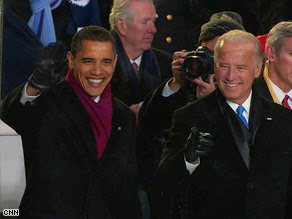
It was 20th January 2009 when Barack Obama was inaugurated as America 44th President. Wearing a navy suit and red tie, Obama repeated the oath of office, his hand on the same Bible used in President Abraham Lincoln's inauguration on 4th March 1861 as the 16th President. Abraham Lincoln entered office in a crisis when America is fighting a Civil war. He was regarded as one of the greatest US president, not only leading the country out of Crisis but drove Slavery out of America.

Barack Obama entered office also in a Crisis. The world are expecting change desperately. They need the leadership and the confidence to get out of this crisis. I watched the inauguration on Channel News Asia and felt very touched with his speech. He sort of became an idol to me.

Obama promised his people 3 million jobs saved or created within 2 years and outlined an agressive stimulus package worth US$825 Billion in his country. Do you know what package is it? His plan has six components. Let me share with you.

1) Double alternative energy production in three years
$32 billion for a "smart electricity grid."
$20 billion in renewable energy tax cuts.
$6 billion to weatherize homes.

2) Modernize federal infrastructure
$32 billion for transportation
$31 billion to modernize federal buildings.
$19 billion in water projects.
$10 billion mass transit projects.

3) Improve health care
$39 billion to subsidize health care insurance for the unemployed.
$90 billion to help states with Medicaid.
$20 billion to modernize health information technology systems.
$4 billion for preventative care;.
$1.5 billion for community health centers.

4) 21st century education
$41 billion to school districts.
$79 billion to states.
$21 billion for school modernization.
$16 billion to boost the Pell Grant.
$2 billion for Head Start.

5) Invest in science research and technology
$10 billion for science facilities
$6 billion to expand broadband.
$1 billion for the 2010 Census.

6) Relief for Families
* Cut taxes by $500 for individuals and $1,000 for families.Tax cuts would be retroactive to 2007, and rebates would be mailed in Q1 2009.
* Greater access to child tax credit for working poor and expand earned-income tax credit to families with three children. A $2,500 college tuition tax credit. Allows first-time homebuyers to keep $7,500.
* Keep extended unemployment benefits through 2009 and provide job training.
* Increase benefits to the poor by $25 billion.

Data Summarised from:
Well. Hope his presence shall inject confidence and the recession be over soon...

Sunday, January 18, 2009

The Paradox of Thrift

Our Senior Minister Goh Chok Tong said the below during his Grassroot event on 6th Nov 08. His likely intention is to help boost confidence among Singaporeans to continue spending money in times of recession...

** Quote **
“If all of us go into a power save mode, then the economy will really go into a recession! This is what economists called the Paradox of Thrift. If you have sufficient savings and can afford to spend, you should continue to spend on life’s little pleasures.
“Take your family to the movies, shop, dine out at restaurants and hawker centres, go for your regular foot massage, indulge yourself at a spa, take a taxi, donate to charity and so on.
“This way, we keep the economy going. In fact, I would say when times are a little slow, you could get the best bargain.” - Senior Minister Goh Chok Tong.
** Unquote **

From Wikipedia, I found the following to explain Paradox of Thrift:

The paradox of thrift is a paradox of economics propounded by John Maynard Keynes. The paradox states that if everyone saves more money during times of recession, then aggregate demand will fall and will in turn lower total savings in the population. One can argue that if everyone saves, then there is a decrease in consumption which leads to a fall in aggregate demand and thus leads to a fall in economic growth.

In simpler words, it means that if we saves more money, the total revenues for companies will decline. This decrease in economic growth means fewer salary increases and perhaps downsizing. Eventually our total savings will have remained the same or even declined because of lower incomes and a weaker economy.

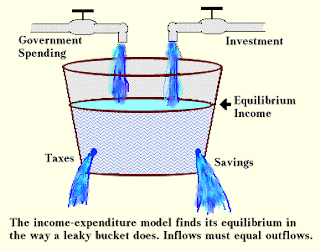
Another simple way to explain is by using an example of a leaking bucket.

* In a leaky bucket, an equilibrium level of water occurs when the leakage just equals the inflow of water.
* In the multiplier model, investment and government spending are inflows
* Taxes and expected saving are leakages
* When leakages increase and inflows remain constant, the level of water will be reduced.


When I read through the comments in "Onlinecitizen.com" website http://theonlinecitizen.com/archives/2765, many people are urging the government to give them money or cut tax like what Obama is expected to do in US. Obama articulated the opinion that "Only government can break the vicious cycles that are crippling our economy – where a lack of spending leads to lost jobs which leads to even less spending; where an inability to lend and borrow stops growth and leads to even less credit."

Many believe that in a financial crisis, the best way to get the economy moving is for the government to "prime the pump" by putting money in the hands of consumers.

The US goverment have to prime more money in because the people in US actually don't have much money. They are highly geared as compared to the Asians. They don't have much savings but still need to spend to keep the economy going because internal consumption take up probably 60% of their economy. If all spending stops, more companies will go bankrupt and more unemployment to come.

But of course, priming money doesn't means giving out money all the time, it can be in the form of tax cut or increasing government expenditure and investments, etc. All these will increase the already ballooning deficit faced by the US Treasury. Nobody knows if Obama's plan will works. Just pray hard that it will or else the global economy will continue to stay down for a long time to come.

As for the consumerism story in Singapore, I think that the "Paradox of Thrift" doesn't apply much here because we are largely a service and manufacturing base compared to the US. The challenge of our government to ensure Singapore stay competitive and as many Singaporeans retain their jobs for as long as possible before the economy turnaround.

Many companies get their projects and contracts secured during times of good economy and managed to save for rainy days. They probably hold retrenchment plans till the last of the project are completed. If the recession stay longer than expected and new projects are not secured, Singapore will be in deep trouble.

Thursday, January 15, 2009

The 3 Skills needed in the Financal Advisory Industry

3 skills are needed in order to lead a meaningful career in the Financial Advisory Industry. If we apply these skills on the correct market, coupled with the right process, success will be in sight for us. I'm currently trying to master the 3 skills and at the same time finding the right group of people to serve. So what are the 3 skills I'm talking about here?

1) The Core skills of acquring knowledge
* A Financial Planner needs a lot of knowledge before he can complete a proper financial plan
* He need to be kept updated of many news around the world, investment opportunities, new insurance plans, etc
* He need to know where to acquire the right knowledge in order to strive and grow. Formal learning such as acquring his CFP, keep reading and going for countless seminars, be humble and learn from others as well as teaching and coaching others.
* My blog itself is like another avenue for me to learn because I learn as I teach and write for other people.

2) The Life skills that apply to yourself
* A Financial Planner needs to be continually motivated and positive.
* I was being trashed and insulted during my journey of being a planner. In a recently case, I was being described to be a monkey just because I recommended unit trust portfolio to a prospect I know through my blog. He said that Fund managers cannot do better than a group of monkeys picking stocks and I'm just another monkey trying to add another layer of cost from him.
* Well, he is not entirely wrong but deep inside, I know there are people who need me and I'll stay on to earn my wage in an honest and ethical way and NOT through monkey business.
* If I believe that I'm a monkey, I will have resign long time ago.

* A Financial Planner need to be very self disciplined. He need to wake up on time to work and do the necessary work inherent in the whole Sales and Advisory Cycle. People do not wake up and call you to buy an insurance or investment plan, we somehow need to call for people and work hard for the next referral.
* For a planner who sell plans with lower commission, he need double the volume, double the dose of passion to work and doubly hard for half the income a normal adviser earns.

3) The soft skills towards other people
* Its useless if you have all the knowledge, be very disciplined and hardworking but people simply don't trust you.
* We need the right communication skills to convene the message to our clients. We need to show clients that we are the pilot of their money and we are able to bring them to the right destination.
* We must impart confidence so that they will act on something. A financial plan is useless if we cannot convince our clients to act on it
* We need to be connected with their heart to gain such trust and confidence. To make it simple. That person must simply like you...

If I'm going to rate myself in term of the 3 skills. I think I can get 7-5-4. I'm not very disciplined in my prospecting and too comfortable with my current group of clients. I also need to improve on my soft-skills. Many people find me to help them with a Financial Plan, but I always can't convince them to take action. Obviously, I'm not convincing enough...

Sunday, January 11, 2009

Looking for a good PA Plan

In my last posting, I mentioned the benefits of having a Personal Accident Cover. It was also highlighted in the comments that it is by no way to replace coverage against death because death can happen due to both accident and sickness.

For those looking for a Personal Accident Cover, I can share a few tips in how I select coverage for my clients.

1) Get a plan that forcus on the core coverage
* Some covers in a PA plan, in my opinion, are not very necessary. When such covers are added in the PA plan, it adds up to the premium.
* What are the common things which I feel are not so necessary
a) Hospital Benefit - If you need this cover, get one which covers accident and sickness. Covering accidents only is not good enough, so no point getting this.
b) Emergency Evacuation - When we go overseas, we usually get a separate Travel Insurance which normally also cover emergency evacuation.
c) Recuperation Benefits, Bereavement Grants, Lifestyle maintenance, etc... They are simply extra benefits to the total sum assured. If you are covered for $100k, why so concern about the extra $5k or so?

2) Look into the definition of an Accident
* Some common Definitions of Accidents
a) Bodily injury caused by violent, accidental external and visible means which is the sole cause of death or disablement or which necessitate medical or surgical treatment
b) Sudden, unforeseen and fortuitous event that results in the insured person suffering death, disablement or injury
c) an event which happens suddenly and gives rise to a result which the Insured person did not intend or anticipate
* First definition is the worst of all. It is very restricted with its definition. I'm not sure if I'll be covered if I die in a fire by fume and not fire or if I die through food poisoning, etc. The 2nd and 3rd Definition remove such restrictions.

3) Check out if your PA plan covers the below:
a) Terrorism. Some insurers covers but put some terms and conditions applies in it.
b) Motorcycling whether its rider or pillion. Don't take chance. You never know when you may need to ride a motorcycle and your family be shock that your PA plan don't cover motorcycling.
c) Certain hazadous sports, such as Scuba Diving, Rock-climbing or Skiing even if its for leisure when you go holiday.
d) Dengue Fever. Some Insurers covers for Insect bites but not for Mosquito bites such as Dengue Fever. Watch out...
e) Traditional Chinese Medicine. Some insurers did not mention anything about TCM. They may or may not pay but they rightfully can refuse to pay you if you visit them.

4) The premium rates
a) Some insurers imposed the same premium rate for Class 1 and 2 occupations. For those in Class 2 occupations, you might be able to get very good rates from them.
b) For a $100k cover, you normally need not pay more than $10/mth. Many PA plans purchased through Credit Card telemarketers normally charges at least $20/mth.
c) Some companies charge you double and promise a 50% refund of premium after 5-6 yrs. I'll rather than you pay less and save up the rest of the premium yourself than to tie yourself with that insurer for 5-6 yrs.
d) Some insurers gives free coverage for children when both parents take up their PA plan. For those with 3 children and above, its a very good free cover.

Have fun shopping for a good deal... but remember that the cheapest or the most expensive plan doesn't always mean the best.

Friday, January 9, 2009

Why Personal Accident Plan???

Most people took up a Personal Accident plan via telemarketers, Credit Card complement or through their company's corporate insurer. An adviser who do not do proper fact-finding may miss out recommending a PA plan. It is understandable that few advisers like to recommend a PA plan largely due to the low premium, low commission and the high chance of claim.


Many people do not have such a low cost policy because they did not hear about it or has misunderstood its coverage. It will be quite unfortunate if an accident strike and they are not able to claim things that are unique to a PA plan. Today, I like to share why its important to have a Personal Accident Plan.

1) Beefing up Death Coverage at low cost
* 6% of Singaporeans die of Accident in 2007. It is not a big number compared to Cancer and Heart Diseases but I believe the chance that a young man dies via accident is higher compared to sickness.
* And it is usually that young man have a higher dependency needs when they are likely to be under-insured.

2) Covering Accidental Permanent Disablement
*A person’s life have a certain value attached which are determined by his dependency needs. Likewise, a person’s hand, leg or eyes should have a value attached as well.
* If a person loses a leg, eye or finger permanently, he is likely not able to claim for any of his policy.
* The chance that a healthy person loses a finger, hand or eye is largely via accident.
* Example. Full Sum Assured $100,000. Loss of one arm = 50%, Loss of one finger = 8% x $100k.

3) Accident Medical Reimbursement
* A person may not be admitted to hospital upon meeting an accident because an accident may not necessary means a major road accident or work place accident, etc. It can be a simple sprain during house moving or a bad cut during cooking, etc.
* Such incident may end the person up in hospital A&E or just the neighbourhood clinic or even the Traditional Chinese Medicine Clinics. Such expenses may come up to as much as several hundred dollars.
* Post Accident visits to Physiotherapist, Chiropractor, Osteopathic Practitioner, Bonesetter or even Acupuncturist might even cost you few thousand dollars if they are not serious enough for one to be hospitalised.

4) The other "Good to have" covers
The 3 items above the are core coverage, but there are many sub-coverage which many accident plans include. The rest are good to have but usually not critical.
a) Daily Hospital Benefits or Weekly Disablement Benefits - Allows you to claim $XXX amount per day in hospital or per week of disablement. Good coverage for those self employed people.
b) Mobility Aid Reimbursement - Allows you to buy mobility aid such as Wheelchair, clutches, etc
c) Ambulance services - Allows you to claim against Ambulance expenses as a result of an accident.

Well. In my next posting, I can share the tips in selecting a good PA plan.